

The Return of the Prodigal Son by Henri J.M. Nouwen
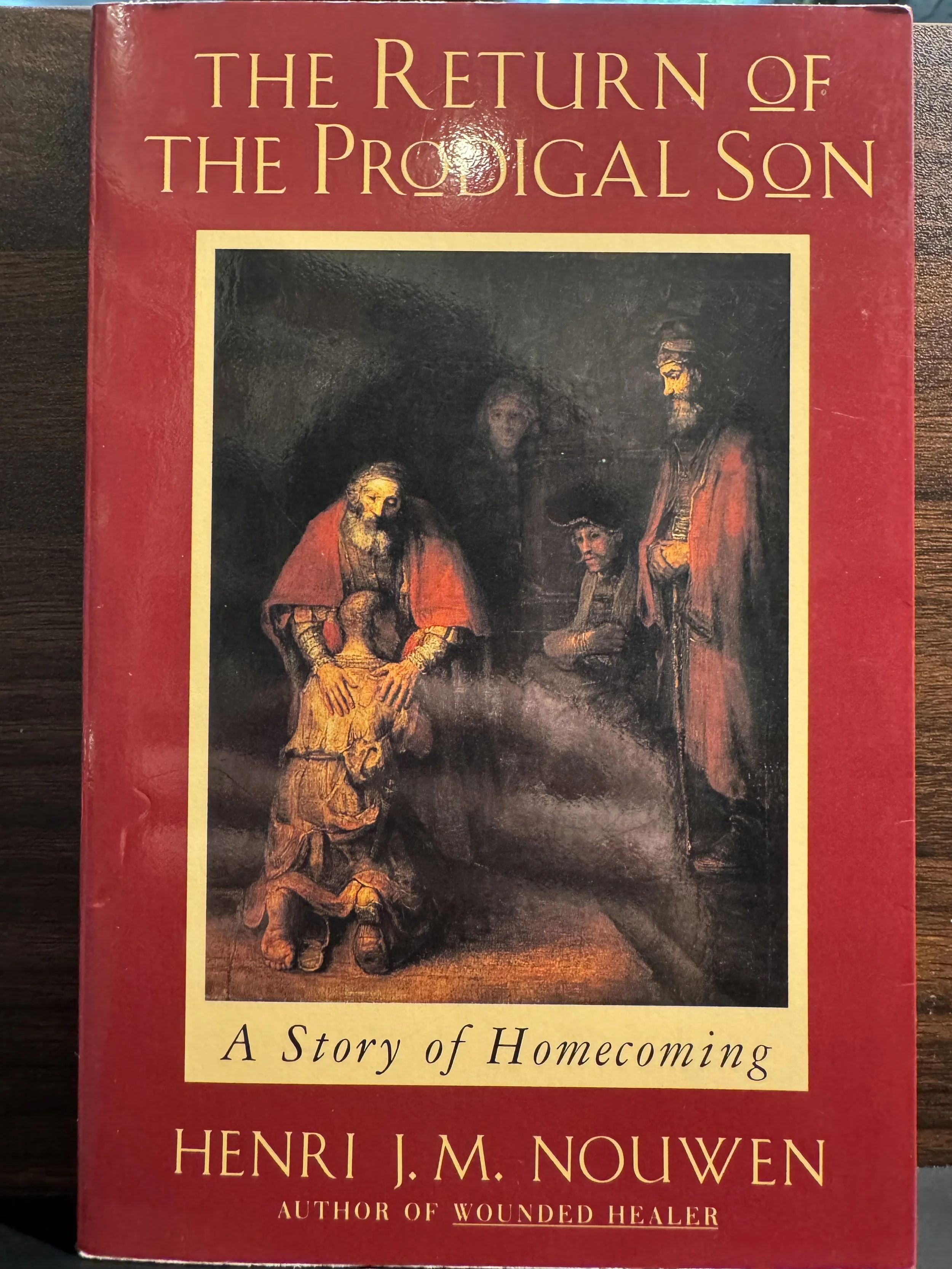
I know I say this about several authors, but one of my favorite religious/spiritual writers is Henri J.M. Nouwen. I have yet to read an unhelpful book by the Roman Catholic priest and scholar. Nouwen was appreciated in his lifetime for his teaching at the Divinity Schools of Notre Dame, Yale, and Harvard. Yet, what set Nouwen apart as an internationally acclaimed person of faith was his writings. Nouwen also honed his faith as the pastor at the L’Arche Daybreak community in Toronto, Canada. The community served those with profound developmental disabilities. Nouwen is appreciated for the spiritual honesty, humility, and transparency he shares through his writings.
Today, I would like to recommend his book The Return of the Prodigal Son. Several years ago, in my present congregation, I shared this book in a sermon, accompanied by Rembrandt's painting of the same name. Nouwen beautifully reflects on Rembrandt’s painting, showing how the prodigal, the father, the elder son, and the others present in the painting reflect the Biblical story, how Rembrandt uses artistic license to expand the story, and how weaving the painting and the Biblical account together broadens the meaning of the beloved story.
I appreciate the detail Nouwen uses to bring Rembrandt’s painting to life, so we can better appreciate the complexity of the world. Nouwen’s description also helps us learn to appreciate the works of art, and Rembrandt in particular. The following is but one example: “Its size, larger than life; its abundant reds, browns, and yellows; its shadowy recesses and bright foreground, but most of all the light-enveloped embrace of father and son surrounded by four mysterious bystanders, all of this gripped me with an intensity far beyond my anticipation.” By the end of the book, you will have received the tools necessary to appreciate not only Rembrandt’s works, but also how to appreciate other works of art as well.
The most profound aspect of the book is Nouwen’s gift for bringing the ancient Biblical parable to life in each reader’s soul. Rembrandt’s painting is but a tool to share God’s wisdom and forgiving love. Nouwen affirms that “Becoming like the heavenly Father is not just one important aspect of Jesus teaching, it is the very heart of his message.” By both visual means and parable, Nouwen helps the reader become “like the heavenly Father” by having us stand in the shoes of each person depicted in the parable, including Rembrandt’s additional characters. I encourage you to dive into this short book of 139 pages, and allow the visual, intellectual, and spiritual aspects of the parable to come alive within you.