

Ministry at The Nuremberg Trials
“For the grace of God has appeared, bringing salvation to all, training us to renounce impiety and worldly passions, and in the present age to live lives that are self-controlled, upright, and Godly.”
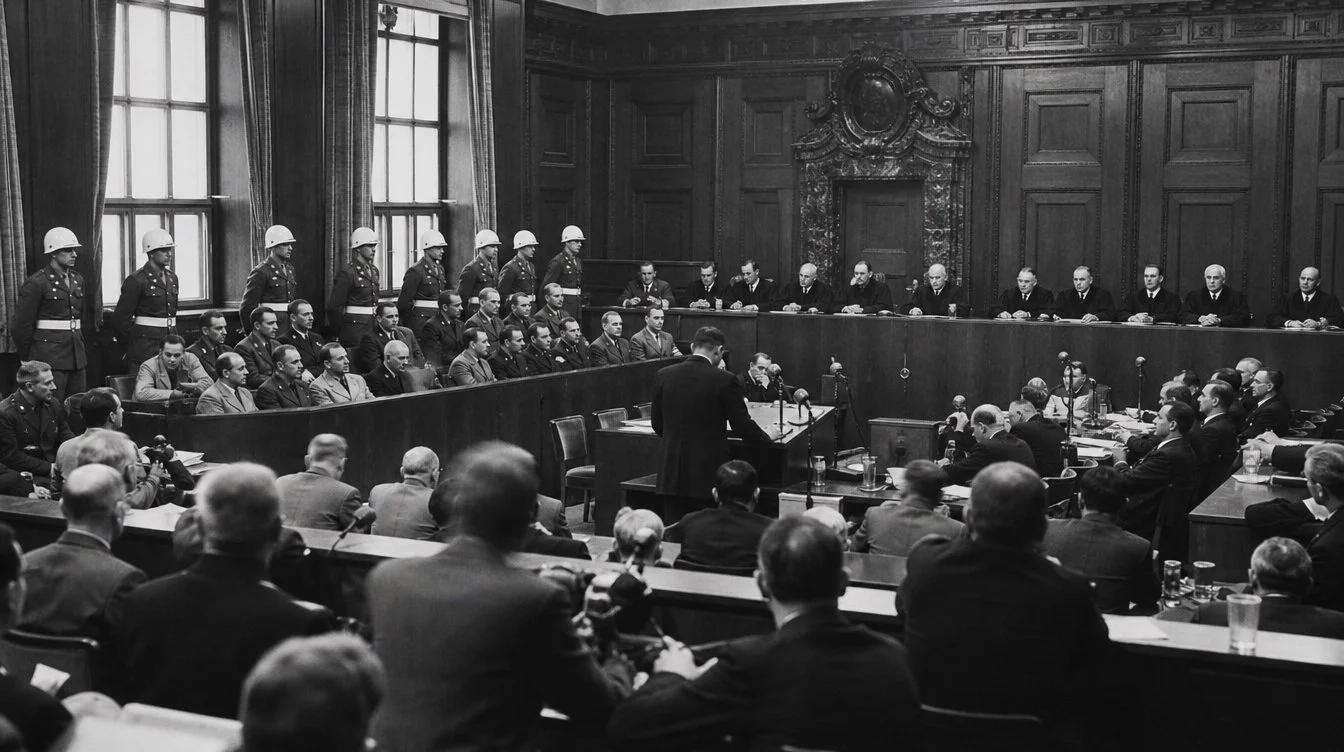
I am reading Mission at Nuremberg, by Tim Townsend, about the Lutheran pastor who was the chaplain at Nuremberg and how he ministered to the Germans found guilty of war crimes. Chaplain Henry Gerecke, whom Townsend said “rhymes with ‘Cherokee,” was a Missouri Synod Lutheran pastor who became the chaplain at Nuremberg. Gerecke was there to provide spiritual support, even with those men who walked to their death.
As I read, I didn’t struggle with Pastor Gerecke providing spiritual care. Instead, as Townsend states, “Pastor Gerecke’s view was that in his domain God alone was Judge, and the question of earthly guilt therefore had no significance so far as he was concerned.” I understand that we are not the divine judge, but I struggle with the idea that their guilt was of “no significance.” Gerecke also believed that as their chaplain he was in “a battle for the souls of men standing beneath the shadow of the gallows.” My theological frustration grew because I do not believe anyone’s salvation is based on my talent as a pastor or person of faith.
One of the Nazi leaders that Rev. Gerecke became close to was Wilhelm Keitel, who, according to Townsend, “had been general field marshal, second only to Adolf Hitler in Germany’s military hierarchy.” Keitel and Pastor Gerecke read scripture together and prayed regularly in the jail cell. After Keitel was found guilty and sentenced to death, Gerecke prayed with him in German. Later, at the gallows, as Keitel was hanged to death, Gerecke raised his hand above Keitel’s head “and gave the general a final benediction.” Over their months of praying together, Gerecke “found the field marshal penitent and ‘deeply Christian.’”
Gerecke’s story at Nuremberg frustrates me. Perhaps Townsend’s book is a blessing, challenging my theological ideas of grace and mercy. Yet, I want to scream. I’ve provided spiritual care for many people who were not upstanding citizens, everyone from prostitutes to leaders of large thief rings to murderers. I believe everyone deserves pastoral care and the opportunity to hear of God’s forgiveness. Yet, I would never define them as “deeply Christian.” Rev. Gerecke’s Evangelical Christianity seems based on pious actions and simplistic affirmations. Missing is the commitment to justice and detailed accountability for the devastating sins that destroyed millions of lives. Dietrich Bonhoeffer called it “cheap grace.” Use Rev. Gerecke and Field Marshall Keitel’s story as an opportunity to reflect on grace, mercy, and how God responds to our actions in this life. Faith in our Triune God provides few easy answers.